Dominik Lejman, Galeria Labirynt

Dominik Lejman, Galeria Labirynt

Publisher: Galeria Labirynt, 2013
Contributions: Dominik Lejman
Texts: Magda Linkowska 
Language: English, Polish
Pages: 31 pages, Hardcover
Format: 15.0 x 20.0 cm
ISBN 978-83-932239-6-1

Galeria Labirynt
"Dominik Lejman is an artist dealing with time-based paintings, video frescoes and films. some of his projects step beyond the gallery context, featuring video projections in the public space. Still, the artist is keen to stress his attachment to painting, which stands at the foundations of his practice. The minimalist forms and nearly monochrome surfaces of his paintings, which traces of "stains" and delicate outlines of geometrical forms, function as screens for video projections."

Dominik Lejman: Healing Loop

Publisher: Centrum Sztuki, 
Contributions: Dominik Lejman
Graphic Design: Jan Rosiek Studio
Language: Polish, English 
Pages: 147 pages, Softcover 
Format: 16.5 x 23.5 cm
ISBN  978-83-61646-42-6


Dominik Lejman: Healing Loop
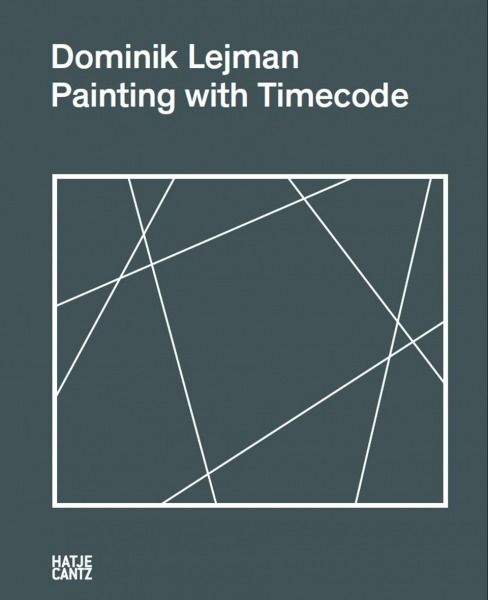
Dominik Lejman: Painting with Timecode

Dominik Lejman: Painting with Timecode

Publisher: Hatje Cantz, 2014
Texts: Doris von Drathen, Timothy Persons, Anda Rottenberg
Format: 24,2 x 29,7 cm
Pages: 192 with 130 illustrations
Language: English
ISBN 978-3-7757-3813-2

As early as in the late nineties, Dominik Lejman (*1969 in Gdansk) began re-exploring the boundaries of painting by combining videos with paintings. Timothy Persons characterized it as follows: "These mergings provoke and confront our prejudices of what we think a painting should be in the same manner as the Suprematists did in using collage as a technique to defy the boundaries of their generation’s assumptions of what a painting was.” In his work, Lejman pays particular attention to architecture and spaces as well as to the question of how they influence or even determine people’s patterns of movement. The structures that the Polish artist uncovers in the process and presents in his installations are extremely fragile, often last only for several moments, cause the limits of space to blur, and in part directly involve the viewer.