Rhizome
The title Rhizome refers to the philosophical concept developed by Gilles Deleuze and Félix Guattari. Unlike a tree, which grows from a single root and follows a hierarchical structure, a rhizome develops in multiple directions at once. Any point can connect to another, without a fixed beginning or end. In Książek’s work, this idea becomes a way of thinking about how images, thoughts, memories, and references intersect, allowing meaning to emerge through unexpected relationships rather than through a prescribed narrative.
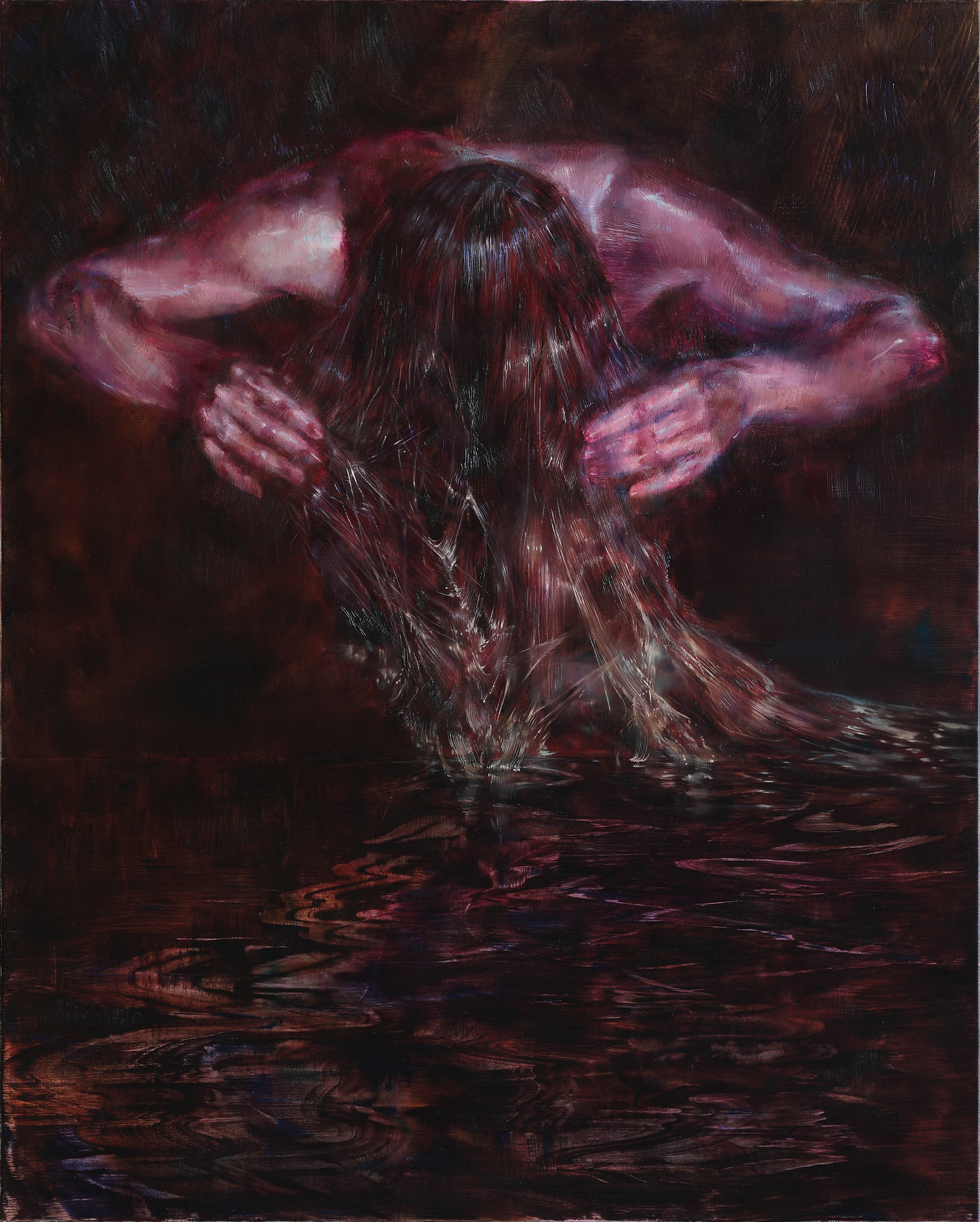
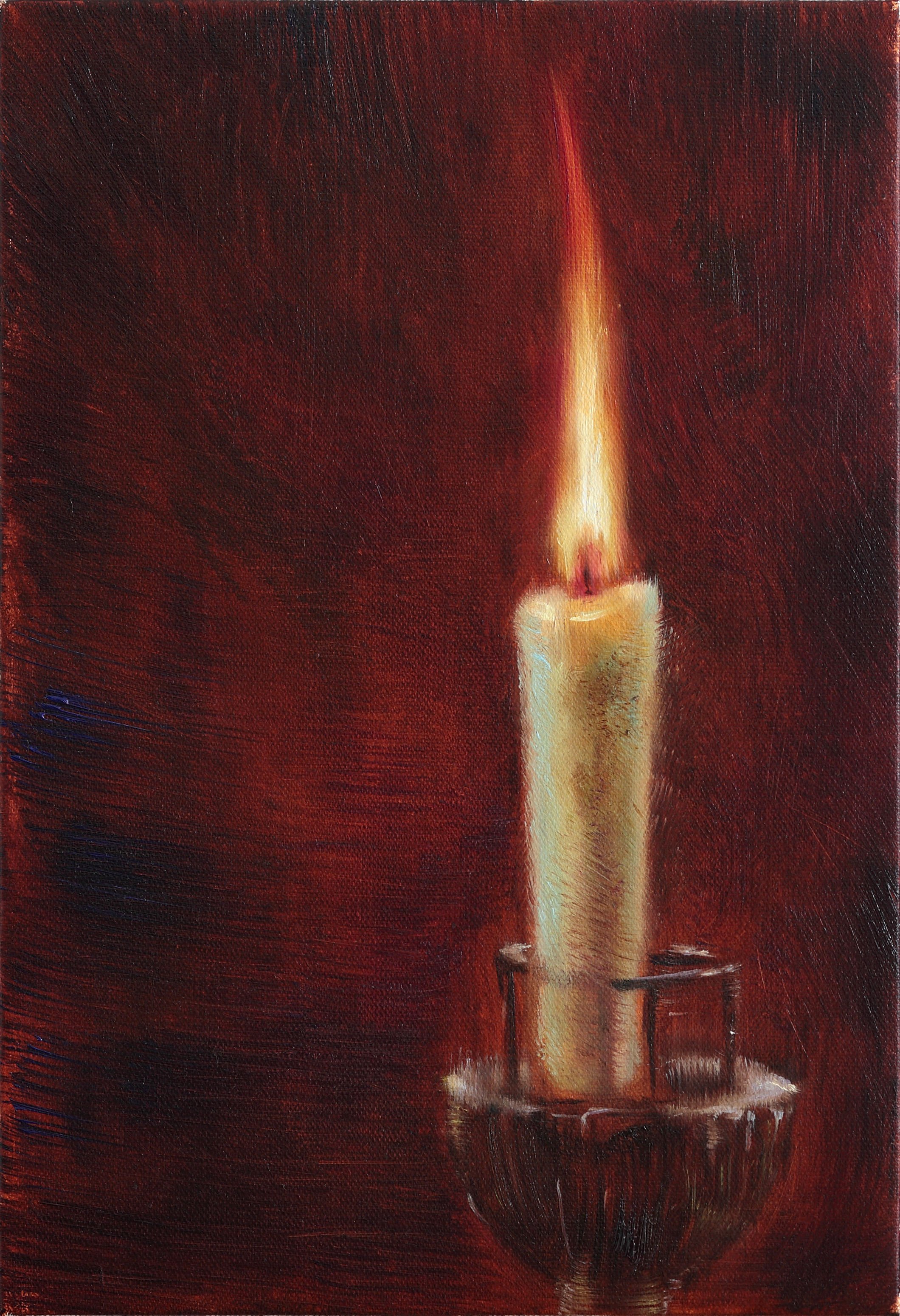
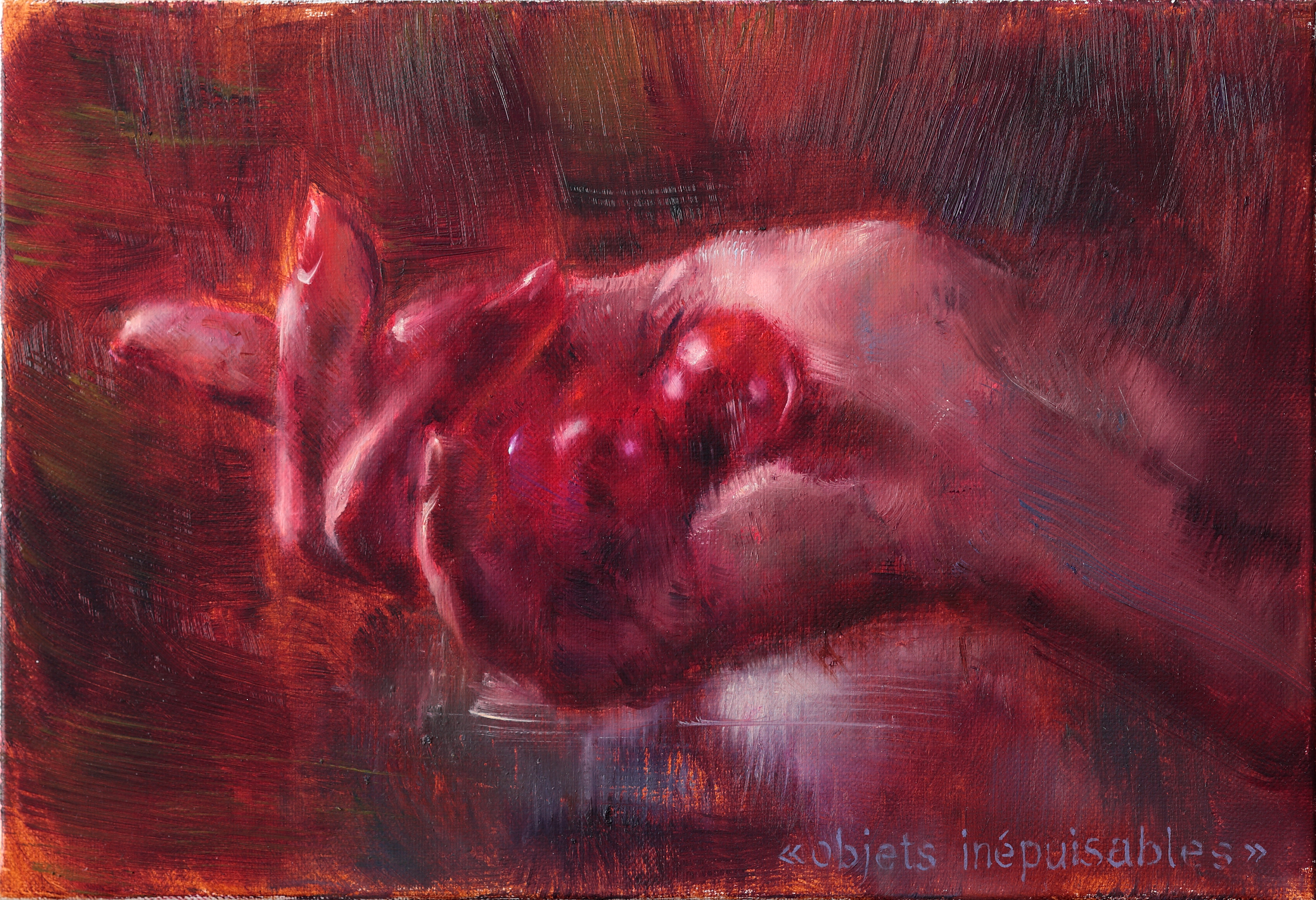
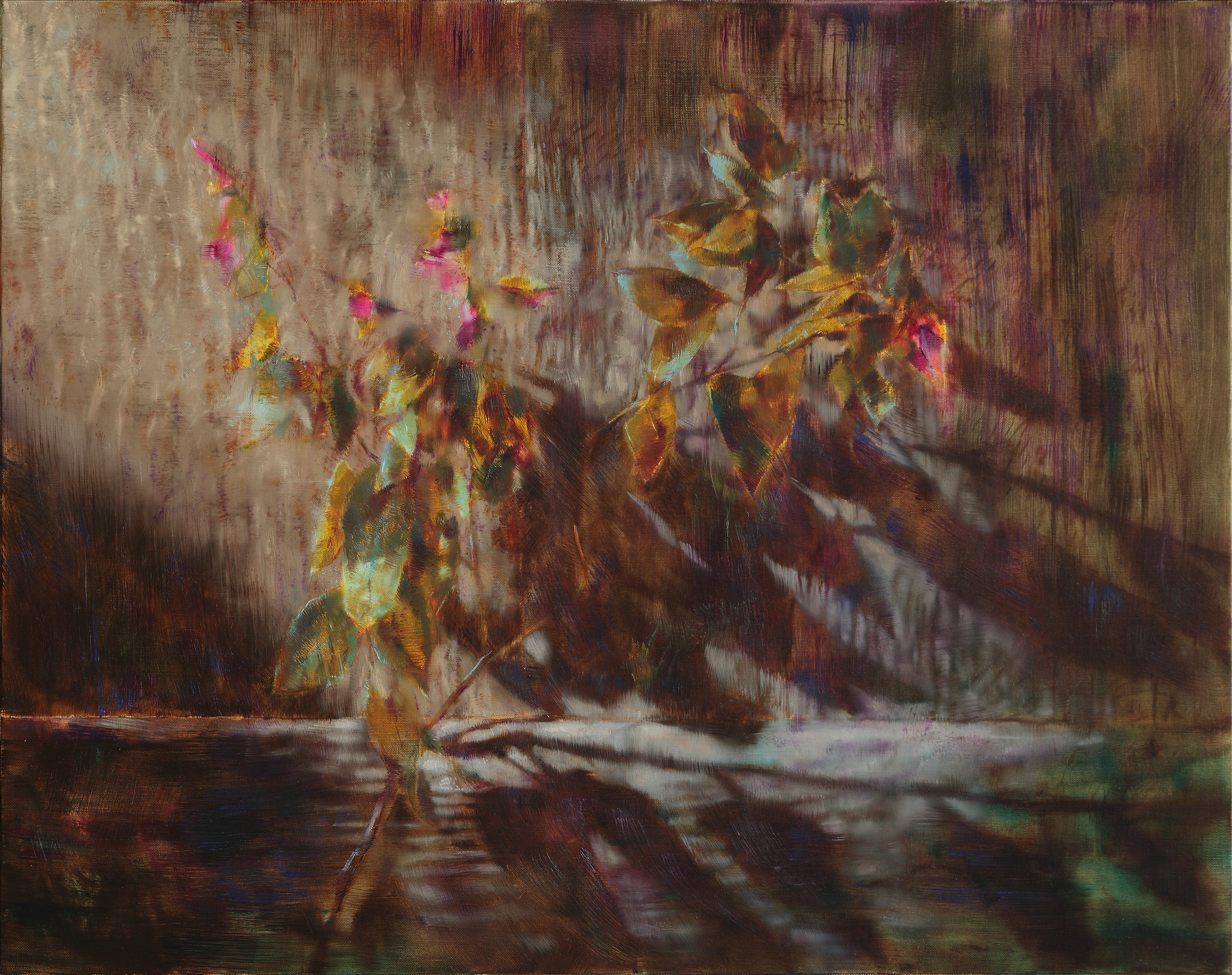
Built through layers of translucent color, blurred contours, and subtle shifts of light, they move between precise observation and near abstraction. Książek often chooses subjects that are particularly difficult to capture in paint: flames, hair, reflections, faces, and objects that seem to change as we look at them. They emerge from atmospheric surfaces only to dissolve again, giving the paintings an almost cinematic intensity.
What connects these seemingly different motifs is not primarily their subject matter, but transformation, flow, and unstable form. Hair and flame, for example, share a visual logic: both resist a fixed contour and are defined by movement, light, and the space surrounding them. Reflections create doublings; bodies turn away or become partially obscured; familiar objects lose their stability and approach abstraction. The paintings are therefore less concerned with depicting things than with the moment in which one form appears to become another.